One of the lesser-known but important factors that can encourage migraine is our “Emotional Motor System” (EMS). Emotions are one of the many factors that lower your migraine threshold. In this blog post we take a closer look at how anger and fear, whether or not you are aware of them, activate your EMS and how this can lead to migraine.
What is the Emotional Motor System (EMS)?
The Emotional Motor System is a mechanism in our body that activates movement in response to emotions. This system can tense muscles in various parts of the body, such as the jaw, the facial muscles, the vocal cords, the diaphragm, the pelvic floor, the iliopsoas, the adductors and the hamstrings. When these muscles contract, they pull on the bones, which stimulates the production of a substance called osteocalcin. This substance puts your body into fight-or-flight mode.
Why is the EMS a problem when emotions become chronic?
Although this system is useful in acute situations, it can cause problems when emotions are not acknowledged and become chronic. When anger or fear is (unconsciously) present but the emotion is not acknowledged, no action is taken either. The emotion keeps simmering underneath, but no “movement” follows. The word emotion derives from “movere”, which is Latin for “to move”. An emotion calls for an action.
If that action does not come, the emotion becomes chronic. The EMS is then activated chronically, and the muscles involved come under chronic tension.
The link between the EMS and migraine
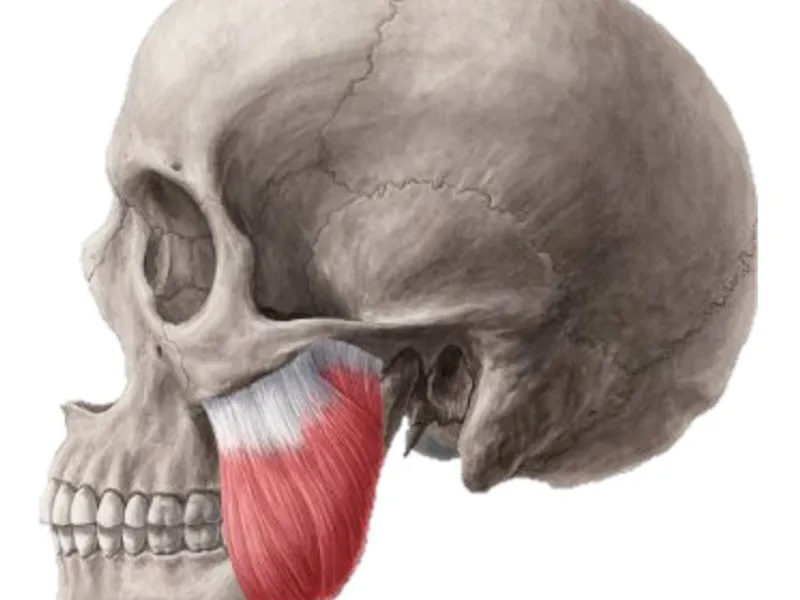
One of the direct consequences of an activated EMS is tension in the facial muscles, especially the masseter muscle. This muscle activity can activate the trigeminal nerve, an important nerve involved in the development of migraine. The continuous strain on this nerve can make migraine more frequent and more severe.
How can you get your EMS under control?
The key to managing your EMS lies in fully feeling and acknowledging all your emotions, even the ones you would rather not feel or consider unjustified. Every emotion is valid, and it is crucial to acknowledge it without judgement. Here are some steps you can take:
- Acknowledge your emotions: take the time to recognise and acknowledge your emotions without judging them. Try journaling to discover your underlying emotions. Do not avoid taboos. Negative emotions towards parents or children are often suppressed because, according to the person experiencing them (or not wanting to experience them), they “shouldn’t be there”. Understand, however, that one emotion does not define the whole relationship with that parent or child, and that inconsistent emotions are perfectly OK. Our emotions do not have to be “logical”.
- Move: the word emotion comes from the Latin “movere”, which means “to move”. Movement helps you process emotions.
- Take action: respond to your emotions by taking actions that help you express and process them, and where possible change the situation.
- Seek help: if you find it hard to discover an emotion, feel it through or act on it, consider consulting a therapist.