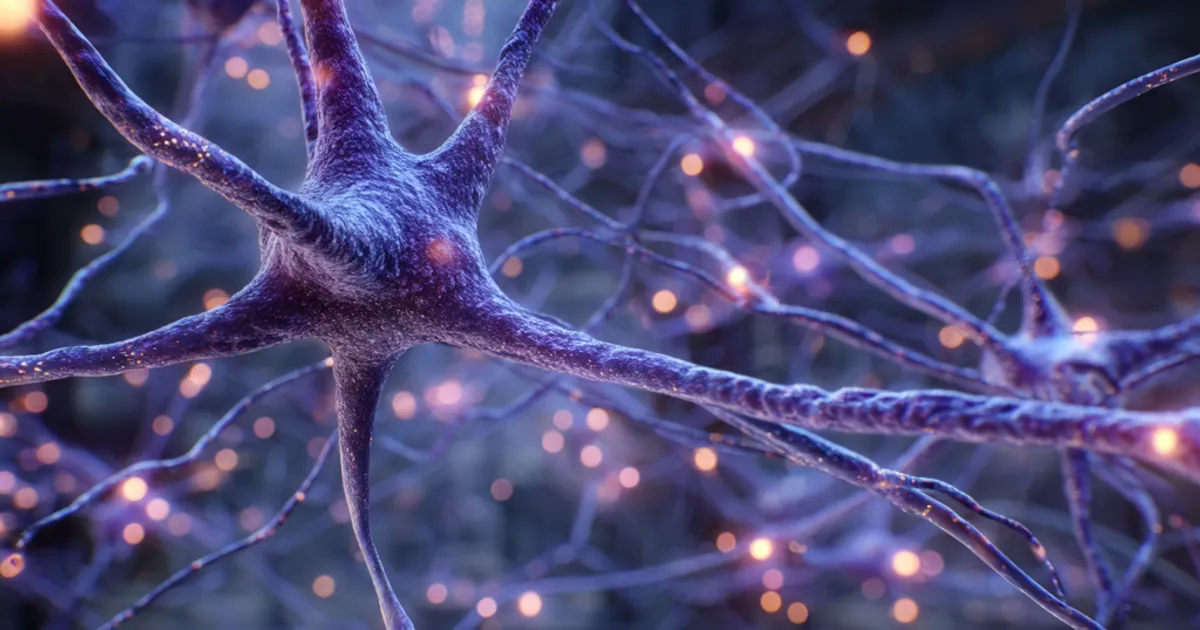
Maybe this sounds familiar: your system always seems to be switched on, you process an incredible number of stimuli, and it feels as if your senses never get a moment’s rest. Many people with migraine are hypersensitive; they pick up more stimuli because their brain doesn’t feel safe. That costs an enormous amount of energy, and it is precisely a shortage of brain energy that can trigger a migraine attack.
Hypersensitivity and sensory processing in migraine
People with migraine are often hypersensitive to stimuli. For genetic reasons, transgenerational reasons, the circumstances they grew up in or a later trauma, they find it harder to dampen stimuli. The brain areas responsible for this are often less strongly connected. Serotonin is a crucial substance for communication between different brain areas, especially for inhibiting excessive stimuli and regulating pain and emotion. With a shortage of serotonin, brain networks are less well connected, so stimuli arrive stronger and more directly and the brain is less able to rationally suppress fear or stress. This leads to a higher need for energy to process all those stimuli, and an energy deficit can trigger a migraine attack.
Oxytocin and neuroplasticity
Oxytocin is often called the “cuddle hormone”, but it has profound effects on brain function. Scientific research shows that oxytocin directly stimulates neuroplasticity: it activates mechanisms that strengthen brain connections, both in young (babies’) and adult brains. Oxytocin improves signal transmission between nerve cells, helps process social and sensory information, and is necessary to make rational control and emotional balance possible. In migraine specifically, a well-functioning and well-connected brain structure is needed so that stimuli come in dampened.
Thirst, bulk drinking and oxytocin
That oxytocin is the cuddle hormone is widely known. Skin-to-skin contact is the most obvious way to boost oxytocin. But there are other ways too!
Remarkably, thirst is a strong physiological stimulus for oxytocin release in the brain; studies in humans and animals show that thirst activates the oxytocin system. Drinking periodically (in bulk), after feeling thirsty, enhances this effect and helps calm the system that regulates blood pressure and electrolytes (the “RAAS”). This is especially relevant because a restless regulatory system can fuel inflammation and disturb the brain’s balance, which is crucial in migraine.
Putting it into practice for migraine
Focus your hydration on bulk drinking: divide your daily water needs (usually 1.5-2 litres) into 3-4 large drinking moments. Allow yourself to feel real thirst from time to time: that is not a drawback, it stimulates oxytocin and brain connections. Only do this when your brain feels stable! Not when a migraine attack is already brewing. Always drink 1-2 large glasses in one go, or as much as you need to feel quenched, with a little salt if needed (exercise, heat, a lot of carbohydrates eaten).
Bulk drinking has a calming effect on the system that regulates blood pressure and inflammation, and helps keep your electrolyte balance stable, which is essential for migraine prevention.
Interestingly, bulk drinking and beta blockers act on the same system (the RAAS).
References
- Mateus-Pinheiro A, et al. Oxytocin and Sensory Network Plasticity. Frontiers Mol Neurosci. 2020 Jan 28;13:8. PMC7000660. https://pmc.ncbi.nlm.nih.gov/articles/PMC7000660/
- Gossen C, et al. Oxytocin, Neural Plasticity, and Social Behavior. Trends Neurosci. 2021 Jul;44(7):491-504. PMID: 33823654. https://pubmed.ncbi.nlm.nih.gov/33823654/
- Grinevich V, et al. Oxytocin, Neural Plasticity, and Social Behavior. Front Behav Neurosci. 2021 Apr 5;15:644784. PMC8604207. https://pmc.ncbi.nlm.nih.gov/articles/PMC8604207/
- Takayanagi Y, et al. Plasticity of neural connections underlying oxytocin-mediated social recognition. Behav Brain Res. 2022 Jun 14;428:113862. PMID: 35443152. https://pubmed.ncbi.nlm.nih.gov/35443152/
- Mitre M, et al. Oxytocin Modulation of Neural Circuits. Curr Top Behav Neurosci. 2019;35:31-61. PMID: 28864972. https://pubmed.ncbi.nlm.nih.gov/28864972/
- Buijs RM. Intermittent drinking, oxytocin and human health. J Neuroendocrinol. 2016 Jul;28(7):123-131. PMID: 27241263. https://pubmed.ncbi.nlm.nih.gov/27241263/
- Eshkol N, et al. Thirst induced by a suckling episode during breast feeding: the oxytocin connection. Regul Pept. 1995 Sep 12;59(2):211-8. PMID: 7586595. https://pubmed.ncbi.nlm.nih.gov/7586595/
- Flynn FW. Thirst. Physiol Rev. 2016 Dec;96(4):1693-1756. PMC5957508. https://pmc.ncbi.nlm.nih.gov/articles/PMC5957508/