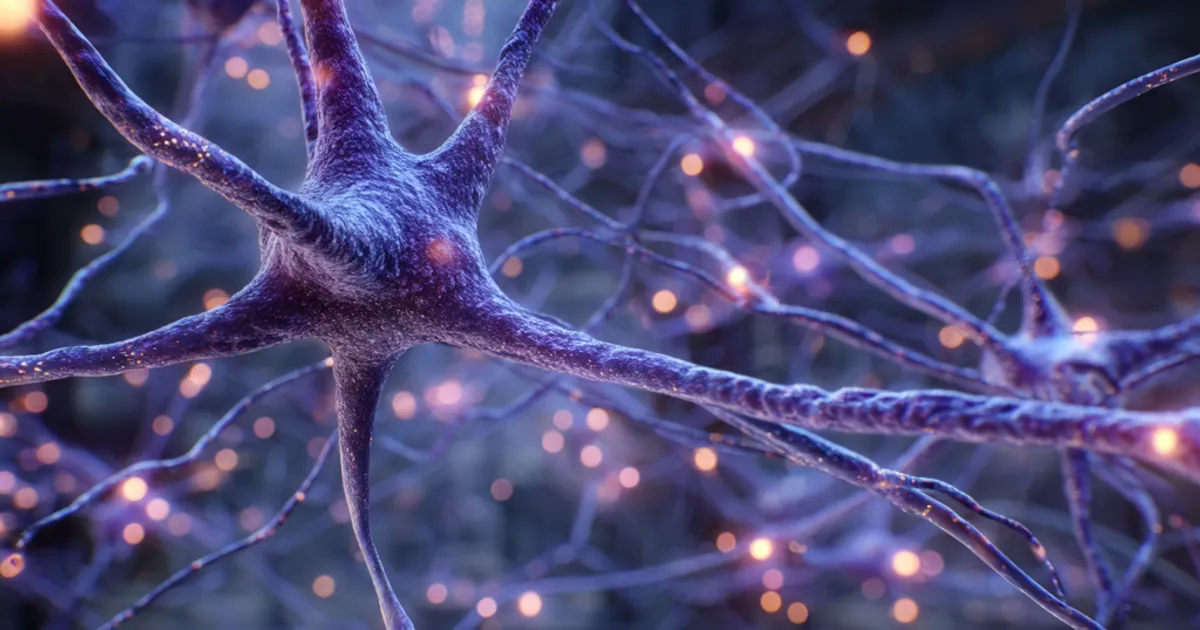
Do you feel like your brain never stops? That you are always “on”, even when you try to relax? In many people with migraine, the brain works overtime, often without them realising it. And that can have big consequences.
Did you know that your brain makes up only 2% of your body weight, but uses up to 25% of your energy? Pretty greedy, then!
In people with migraine, that energy consumption is often even higher. These brains don’t like being switched off and having to share their energy with the immune system or your digestion.
The overstimulated brain: a silent energy thief
Many people with migraine have a brain that struggles to settle down. Think of perfectionism, a strong sense of responsibility, worrying, unresolved emotions, emotional conflicts, hypersensitivity, difficulty setting boundaries… All of these factors keep your brain in a chronically active state. That increases the risk of:
- Oxidative stress in the brain
- Neuroinflammation (low-grade inflammation of the brain)
- A disturbed electrolyte balance
- An energy crisis in brain cells
These underlying processes are often the basis of recurring or chronic migraine. Together with other factors, they form the building blocks behind migraine.
The effect is made worse when other factors are at play that leave less energy or recovery capacity available for the brain.
Migraine and worrying: just like an overloaded muscle
To understand this better, you can compare it with a muscle or joint. If you use a muscle continuously without rest, tiny tears develop. Not a problem, as long as there is enough recovery time. But if you keep going, the muscle becomes overloaded, inflamed and damaged.
Your brain works the same way. Through a constant stream of thoughts, worries and stimuli, it uses more energy than it can recover. The result? A brain that “burns out” and has too little capacity left to repair damage. That is the perfect recipe for a migraine attack.
A natural approach to migraine: Make it sacred
If you want to tackle migraine naturally, consciously slowing down is an important tool. My favourite method? Make it sacred. Turn small, everyday actions into a ritual.
A cup of tea in the morning? Make it a little ritual. Feel the warmth of the cup, sip it slowly as if it is warming you right through. Drink it in your favourite spot.
Emptying the dishwasher? A little gift to yourself. In a moment you will have clean dishes thanks to this action. Making your bed? A lovely gift that lets you snuggle into your bed tonight as if you are arriving at a hotel.
A task for work? You have earned a bit more money that you can spend on a nice meal later.
The result is that you automatically start acting mindfully and pay attention to what you are doing. Through these conscious mini-rituals your brain can slow down a little and finally gets time to recover. And that is essential for lowering the chance of your next attack.
What doesn’t feel like a gift
Make it sacred means: turn your actions into a ritual, a gift to yourself. But sometimes you feel the opposite. You notice that what you are doing doesn’t give you energy, that it even drains you. Afterwards you feel frustrated, tired or irritable. As if you have sacrificed a piece of yourself. Those are important signals.
Not every action is a gift. And that is exactly where the doorway to change lies.
Maybe you say “yes” while you feel “no”. Maybe you take care of everyone except yourself.
Maybe you keep up routines that no longer serve you, because “that’s just how it’s done”. Maybe you can’t find energy in the tasks for your job.
Those actions are often the result of old patterns: people-pleasing, guilt, the drive to achieve, avoiding conflict… But every time you cross your own boundary, your energy drains further. Crossing your boundaries means moving further away from who you really are and what you need. If your body and brain are overruled too often, eventually they start setting boundaries themselves: through fatigue, tension, or migraine.
How to get closer to yourself again
Pay attention to what doesn’t feel like a gift. These are signposts that help you get to know yourself better. Check in with your body: does this feel light or heavy, nourishing or exhausting?
Recognise the pattern without judgement. Smile at the fact that you notice it. Maybe you can finish the action with minimal energy use. Then, for the future, simply set the intention that you want to be more aware of this, and perhaps make a different choice, take a new direction. It doesn’t all have to happen today; everything starts with awareness. The smallest change has the biggest impact. What matters is that you feel you are on the path towards yourself, not that you are already there. The insight you take from this action is the gift to yourself.
By looking at this clearly, you return to who you really are, not to what you think is expected of you. That is a form of sacred self-care: coming home to yourself.
In my book 📘 HEADSTRONG: Understand Your Brain. Break Your Migraine Patterns. I explain in detail how your brain, your immune system and your emotional state influence each other. The chapter “Dissociation” is about how you may have lost touch with yourself.